Help keep your hearing healthy
EPIC Hearing Healthcare helps members access hearing exams, hearing aids and more. Sign in to learn more and check eligibility.
Just starting your journey to better hearing? You’ll want to weigh the advantages of these two types of devices.

Have you noticed you can’t catch every word of dialogue on your favorite TV show? Or that you sometimes have trouble hearing in a crowded restaurant?
And maybe, just maybe, you’re wondering if it’s time to get a hearing test — or even (possibly) hearing aids.
Even 10 years ago, the choices for getting treated for hearing loss were still limited. That’s not the case anymore. Today, people can choose from two routes: The self-guided path to purchase over-the-counter (OTC) hearing aids without a prescription or an appointment with a hearing care professional. Or the expert-guided path to get help picking prescription devices from hearing experts.
So which path should you take? Well, that depends on a few factors. Here’s what to know so you can make an informed choice.
EPIC Hearing Healthcare helps members access hearing exams, hearing aids and more. Sign in to learn more and check eligibility.
There are a few basic things to know about OTC hearing aids. First, they’re for adults who have self-diagnosed mild to moderate hearing loss.1 With this type of low-level hearing loss, you may have trouble hearing conversations in loud spots, such as restaurants. You may notice you’re turning the TV volume up a little bit. Or you’re asking people to repeat things.1,2
Second, you don’t need an appointment or a prescription to get OTC hearing aids. You can order from an online store and have them shipped to your door. And they tend to cost less than prescription devices.
Other things to know:
There are 2 main types of OTC hearing aids — targeted and all-day wear. Here’s what to know about each:
Whichever type you get, there are also benefits for your brain. “We know if you have a mild hearing loss, you are at a significantly greater risk for cognitive decline,” Person says. With OTC hearing aids, a person has the ability to hear better, which may help stimulate the brain.
Ready to shop for OTC hearing aids? Use this simple tool to find the right OTC device for you. Start now.
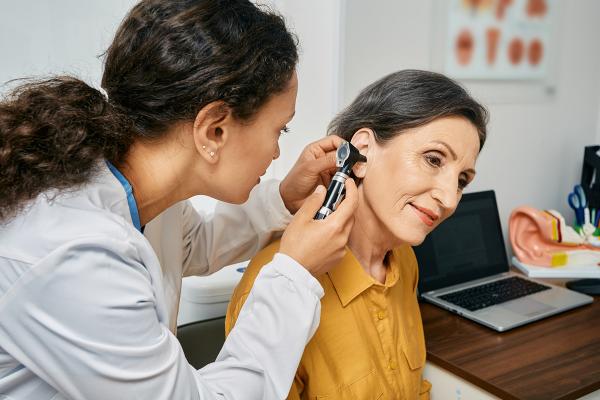
When you buy prescription hearing aids, you get guidance and support from a hearing care professional throughout your hearing aid journey.
This starts with a comprehensive hearing test. But that’s just the beginning. Your hearing care professional will also discuss your needs, your wants and what’s going to be best for you, Person explains.
This is a more personalized, tailored approach. Hearing care professionals take into account things like how well you’re able to see small buttons on a device, for example. That can be important when they explain your hearing aid options.
Once you’ve chosen a device, you’ll see the hearing care professional for a fitting. They can make adjustments, walk you through how to operate your new devices and offer support as needed. Most prescription devices also have an app that lets you customize settings and get additional help.
Other things to know:
Prescription hearing aids may be more affordable than you think. Some prescription models may even cost less than higher-priced OTC brands, says Person. That’s why it’s good to have a conversation about your budget.
“Money is always a factor. We all have a budget,” says Person. Your hearing care professional will keep that amount in mind as they discuss your needs. Then they’ll aim to find prescription hearing aids that fit the bill. One excellent value option? Relate®, EPIC Hearing’s private-label hearing aid brand.
Prescription hearing aids will be programmed for you. Your hearing care professional can program special settings on your devices to fit your lifestyle and needs. For example, if you’re a music lover, maybe you’d like a special setting just for concerts. Or a setting that helps you hear better in the car. Or to reduce wind noise when you exercise outdoors.
You’ll get follow-up care. Prescription hearing aids can last for years.3 So taking care of them is important. A hearing care professional will probably schedule you for yearly maintenance checks. That way, they can deep clean your devices and upgrade any software. They’re also available for troubleshooting if you’re having issues with your devices.
Sources
Published Dec 29, 2025
Information is for educational purposes only and is not a substitute for the advice of a licensed medical provider. Consult your provider prior to making changes to your lifestyle or health care routine.
Relate® is a registered trademark of Ear Professionals International, LLC and is manufactured by Sonova. For assistance, if needed, or to report unexpected operations or events please contact Sonova at [email protected].